

Who Supply-Only Is Actually For
Supply-only means we make the sealed glass unit to your measurements and you fit it. It suits landlords with a stack of misty units to clear, tradespeople who fit but do not manufacture, and confident DIY homeowners who own a bead knife and are not nervous about handling glass.
It is not for everyone. If the window is above ground floor, if the unit is over about 1.2m in either direction, or if you are unsure whether the frame is internally or externally beaded, pay for fitting. A cracked unit on the driveway costs more than the labour you saved.
How to Measure a Sealed Unit Correctly
Measure the glass, not the frame. This is where most first-time orders go wrong.
1. Measure the visible glass
With the window shut, measure the width and height of the glass you can see, in millimetres, at three points each way. Use the smallest figure.
2. Add the hidden edge
Roughly 8-10mm of the unit sits behind the beading on each side. So add 16-20mm to both the width and the height of the visible glass. If you can remove one bead safely and measure the true unit edge-to-edge, do that instead - it is exact.
3. Measure the thickness
Standard UK units are 24mm (4mm glass, 16mm cavity, 4mm glass) or 28mm. Slide a steel rule into the bead gap or measure the frame rebate depth. Getting this wrong means the unit will not sit in the frame at all.
4. Note the orientation
For obscure glass and Georgian bars, mark which face goes outside and which way the bars run. Send us a photo with the order.
Golden rule: measure twice, order once. Sealed units are bespoke, so they cannot be returned or resized once toughened.
What to Specify When You Order
- Glass type - clear float, obscure pattern, or toughened safety glass (mandatory for doors, low-level glazing and anything within 300mm of a door edge).
- Coating - a Low-E soft coat on the inner pane is standard in 2026 and needed for any Building Regs work.
- Gas fill - argon is standard and inexpensive.
- Spacer bar - warm-edge composite outperforms aluminium at the edges and reduces perimeter condensation.
- Spacer colour - black, grey, white or bronze. Match what is in the frame now.
- Extras - Georgian bars, leaded designs, obscure patterns, self-cleaning outer pane.
What Supply-Only Costs
Because you are buying glass and manufacture only, no labour, no scaffolding, no van, prices sit well below a fitted job. Small units start around £45 and a typical 900 x 1200mm Low-E argon unit lands in the £90-£140 bracket depending on spec. You can get an instant figure on our supply-only calculator and collect from Basildon or arrange local delivery.
Fitting a Sealed Unit in Six Steps
- Remove the beads. Work a bead knife or stiff scraper into the joint at the middle of the longest bead, lever gently, then work outwards. Label each bead - they are cut to length and are not interchangeable.
- Lift the old unit out. Wear cut-resistant gloves. Tilt the top out first, then lift clear. Lay it flat on a soft surface, never leant on a corner.
- Clean the rebate. Remove old glazing tape, silicone and debris. Any grit left behind will point-load the new glass.
- Set the packers. Location and bridge packers go in at the correct positions for the sash type. This is what carries the weight - never let the glass rest on the frame corners.
- Dry-fit and check. Offer the unit in, check even margins all round, then check the sash still opens and closes squarely before you bead it.
- Refit the beads. Start with the short beads, tap home with a nylon mallet, then the long ones. Wipe down and you are finished.
The Mistakes That Cost People Money
- Measuring the frame aperture rather than the glass plus the hidden edge.
- Ordering 24mm when the frame takes 28mm.
- Skipping packers, so the unit sits on the frame and the seal fails within a year.
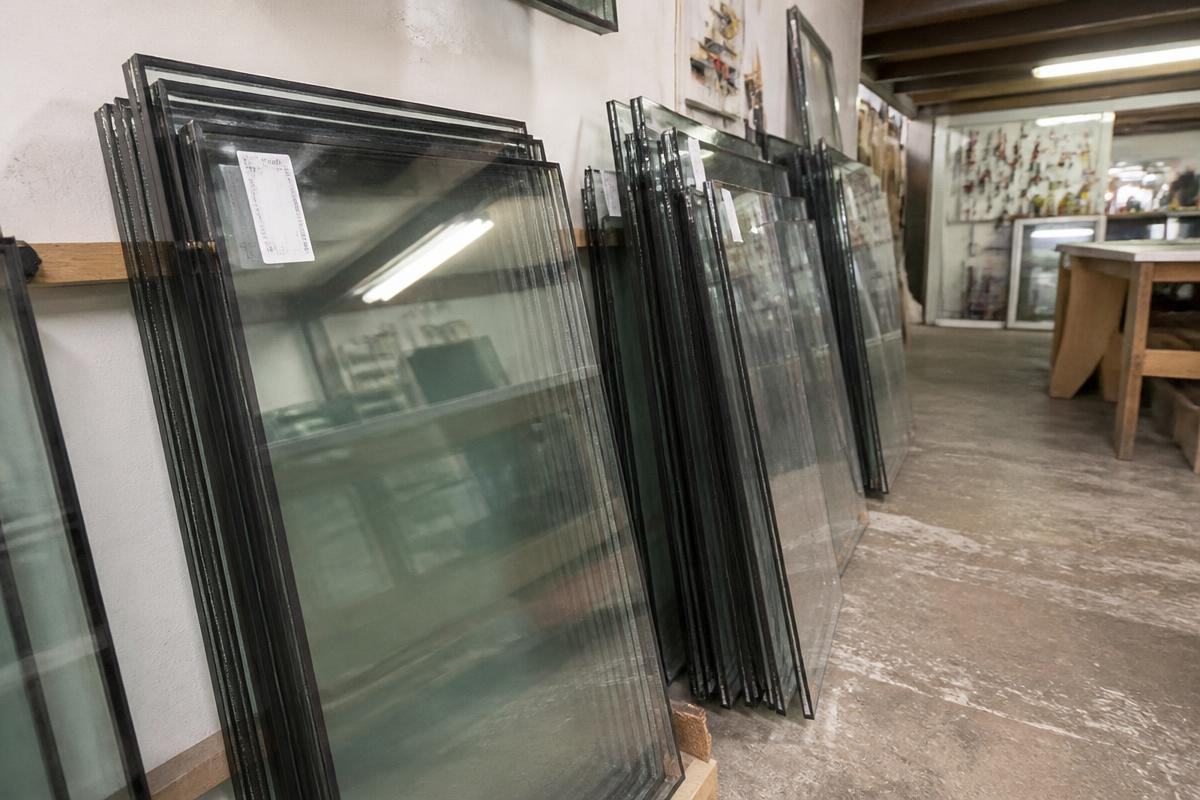
- Storing units flat and stacked - always store on edge, on timber, at a slight lean.
- Forgetting toughened glass where the regulations require it.
Not Sure? We Will Fit It
If any of the above sounds like more hassle than it is worth, we fit across Essex and East London with a 25-year guarantee on the sealed unit. Compare it with our fitted sealed unit cost guide before you decide.