

Why uPVC Windows Get Draughty (It's Not the Frame)
Modern uPVC frames are airtight when the window is closed correctly. When you feel cold air around the edges it almost always comes from one of four small things, all of which are cheap to fix:
- The hinges have dropped slightly so the sash no longer compresses the gasket evenly.
- The rubber gasket has shrunk, hardened or pulled out of its channel.
- The lock keeps (the metal plates the lock pins engage with) have worked loose so the sash sits proud of the frame.
- The external sealant between the frame and the brickwork has cracked.
None of these require a new window. With an hour of careful work and under £20 of parts, almost any draughty uPVC window can be brought back to airtight.
Step 1 - Find the Leak (The Candle Test)
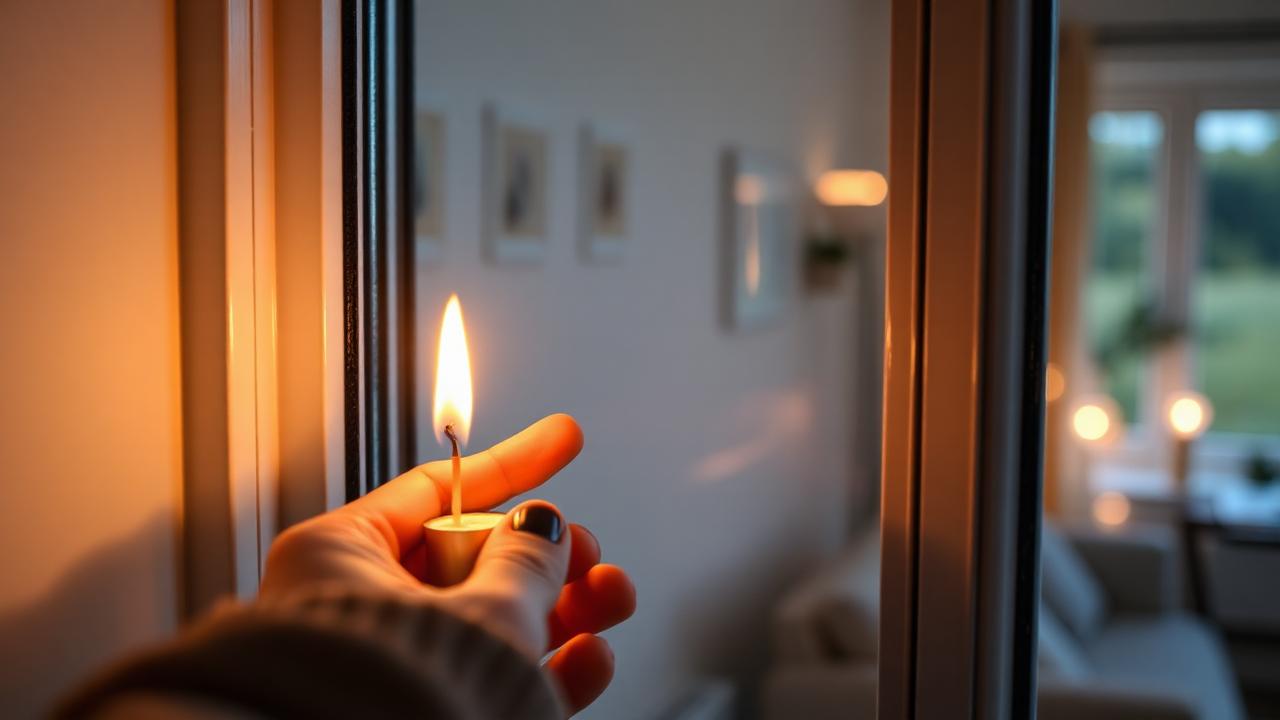
Pick a windy day, close the window fully and lock it. Light a small candle and slowly trace the flame around the inside perimeter of the sash, about 15mm from the frame.
- Where the flame flickers inwards, cold air is coming in.
- Where the flame stays still, the seal is good.
- If the flame flickers consistently along the top edge - hinges are usually the cause.
- If only one corner flickers - it's almost always a damaged gasket or a loose keep.
- If the flickering follows the lock side - tighten the keeps first.
Tea-light flames are gentler and safer than long matches. Keep the flame well clear of curtains.
Step 2 - Adjust the Hinges (10 Minutes per Window)
uPVC friction hinges have two adjustment points: a height screw at the top of the hinge and a compression screw on the side. A 4mm Allen key fits most.
- If the sash drops at the handle side, raise it 1-2mm with the height screw on the lower hinge.
- If the gasket isn't compressing on the hinge side, turn the side screw quarter-turn clockwise to pull the sash tighter.
Test by closing the window onto a strip of paper - the paper should grip evenly when you tug it. Repeat top, middle and bottom.
Step 3 - Replace the Gasket (20 Minutes per Window)
Black rubber gasket runs in a channel around the inside of the sash. Cracked, shrunken or missing sections let air whistle through.
- Take a 50mm sample of the existing gasket to a glazier or builders' merchant. There are about a dozen common profiles - matching is essential.
- Pull the old gasket out by hand. It should release without tools.
- Wipe the channel clean and dry.
- Press the new gasket in starting at one corner. Don't stretch it - lay it loose so it can sit naturally.
- Cut the joint with a sharp blade and butt the ends without overlap.
Cost: about £3 a metre. A typical opening uPVC window needs 2-3 metres.
Step 4 - Tighten the Lock Keeps (5 Minutes per Window)
The keeps are the silver metal plates on the inside of the outer frame that catch the multipoint lock pins. They sit on adjustable cams.
- Open the window and look at each keep. Many have an Allen-key adjustment slot or an eccentric cam.
- Turn each cam to its tighter setting (usually a quarter turn).
- Close the window and check the locking effort. It should still feel firm but not jammed.
Step 5 - Re-Seal the External Beading and Brickwork (30 Minutes)
From outside, walk the perimeter of every frame. Any crack in the silicone bead between the frame and the brickwork lets wind drive water and air into the wall and frame cavity.
Cut out the failed silicone with a sharp blade, clean back to bare surface, mask both edges, and run a fresh bead of low-modulus neutral-cure silicone. Tool the bead with a wet finger or silicone shaper. Cures in 24 hours.
What If None of That Works?
If you've adjusted, re-gasketed and re-sealed and the draught remains, three less common causes are worth checking:
- Warped sash - rare on modern profiles, more common on south-facing 1990s windows. Visible by sighting along the closed sash from one corner.
- Failed multi-point lock - if the handle still rotates fully but you can rock the closed sash by hand, the lock is no longer pulling it tight.
- Trickle vent left open - obvious but easy to miss. Slide the inside flap closed and re-test.
When to Call a Glazier Instead
If the draught is coming from inside the sealed glass unit (you'll see misting between the panes too), it's a blown unit, not a draught. See how to tell if your double glazing is blown.
If the hinges are physically broken, or the multi-point lock no longer engages, those are 30-minute jobs for a glazier and run £60-£150 supplied and fitted across Essex.
Free Draught Diagnosis
If you'd rather have someone do the candle test for you, our team across Essex and East London offers a free 15-minute draught and seal check. We bring the gasket, the Allen keys and the silicone - and we'll tell you honestly if it's a £20 fix or something more.