
The Two Frame Materials That Dominate UK Homes
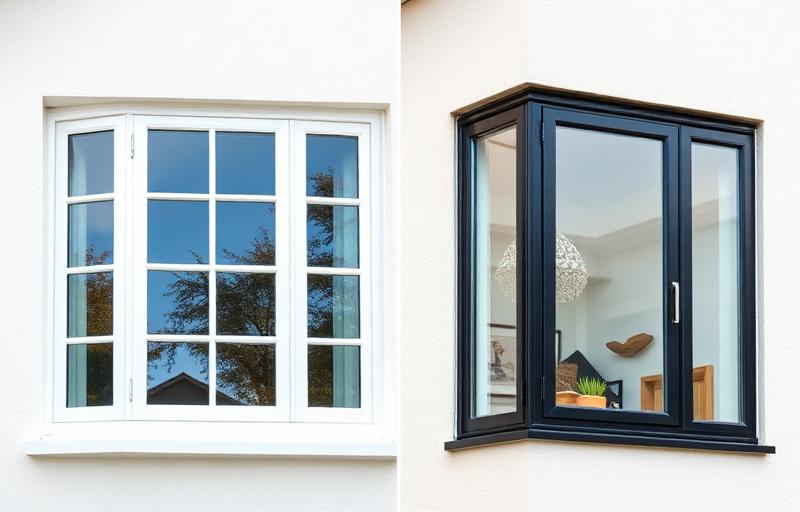
Together, uPVC and aluminium account for roughly 90% of replacement window installations in the UK. Both are excellent materials. Both will last decades when properly fitted. The "right" choice depends entirely on your priorities - and your budget.
This guide compares them honestly across the seven factors that matter most. We repair both, so we have no horse in the race.
1. Cost
uPVC wins clearly. Aluminium typically costs 35-60% more than the equivalent uPVC window. For a full house of 8-10 windows in 2026:
- uPVC supplied and fitted: £4,500 - £8,500
- Aluminium supplied and fitted: £7,500 - £14,000
That's a £3,000-£5,500 difference for the same number of windows in the same property.
2. Aesthetics and Sightlines
Aluminium wins clearly. Aluminium's strength lets manufacturers use much narrower frame sections - sometimes as slim as 20mm - which means more glass and a noticeably more modern look. uPVC frames are typically 70-100mm thick because the material needs more bulk to be rigid.
For contemporary homes, large feature windows, sliding doors and minimalist extensions, aluminium is usually the right call. For traditional homes - especially heritage replacements - quality uPVC with woodgrain foils now looks remarkably authentic.
3. Energy Efficiency
Effectively a tie at the modern end. Both can achieve U-values of around 1.2-1.4 W/m²K with good sealed units. Older aluminium frames had a thermal bridge problem (metal conducts heat) but modern aluminium uses a polyamide thermal break to solve it. uPVC is naturally insulating and slightly easier to achieve very low U-values without specialist glass.
If energy efficiency is your top priority, the glass spec matters more than the frame. See our energy efficient windows guide for the detail.
4. Lifespan and Durability
| Factor | uPVC | Aluminium |
|---|---|---|
| Frame lifespan | 25-35 years | 40-50+ years |
| Yellowing risk | Cheap white uPVC can yellow over 15+ years | Powder coat lasts decades, no yellowing |
| Warping in heat | Dark colours can warp slightly in heatwaves | Stable across all temperatures |
| Coastal environments | Excellent - no corrosion | Excellent - powder coat resists salt |
5. Security
Effectively a tie when both are PAS 24 certified. Both materials can house high-security multi-point locking systems. Aluminium is harder to physically break or saw through, but most break-ins target the lock or the glass, not the frame itself. Specify PAS 24 hardware regardless of frame material - see our window security guide.
6. Maintenance
Tie - both are essentially maintenance-free. Neither rots. Neither needs painting. Both require nothing more than warm soapy water twice a year and a drop of light oil on the hinges. We cover this in our spring maintenance checklist.
7. Sustainability and Recycling
Aluminium wins on recyclability. Aluminium is infinitely recyclable with no quality loss and most replaced frames are recovered. uPVC is recyclable but the process is more involved and recovery rates are lower in practice. However, uPVC has a lower production carbon footprint per window. Net environmental impact depends on lifecycle assumptions and is closer than either industry typically claims.
The Quick-Decision Cheat Sheet
- Tightest budget: uPVC
- Modern minimalist look: Aluminium
- Period property: uPVC with woodgrain finish, or hardwood timber
- Very large windows or sliding doors: Aluminium
- Coastal home: Either - both are fine
- Maximising EPC rating cheaply: uPVC
- Forever home, future-proofing: Aluminium
What If You Just Need a Repair?
Whichever frame material you have, the failed sealed unit inside is the same product - and the repair is identical. We replace blown units, cracked glass and failed hardware in both uPVC and aluminium frames across Essex and East London, usually in under an hour per window.
Most homeowners assume they need to replace their aluminium frames when the glass goes - they don't. Aluminium frames typically outlast their original glass by 20+ years.