

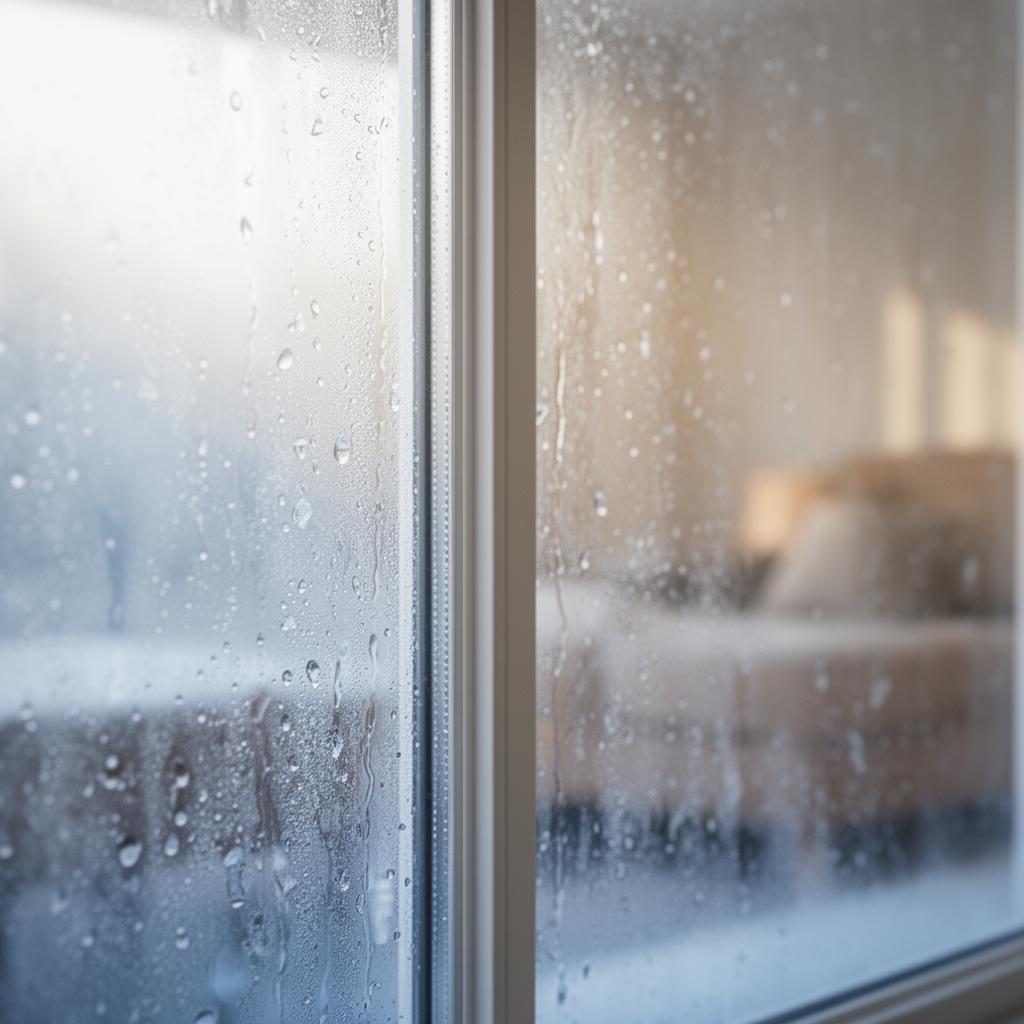
Three Types of Condensation - Three Different Fixes
Condensation on your windows isn't always a sign of a problem with the glass itself. Where the moisture sits tells you exactly what's going on - and what you need to do about it.
1. Condensation on the Inside of the Glass
If you're wiping water off the room-side of your windows each morning, the windows are doing their job - they're the coldest surface in a warm, humid room. The cause is too much moisture in your home and not enough ventilation.
What to do
- Use trickle vents or open windows for 10 minutes morning and night
- Run extractor fans during and 15 minutes after showering and cooking
- Dry washing outside or in a vented utility, never on radiators
- Aim for indoor humidity between 40-60% (a £10 hygrometer tells you)
2. Condensation on the Outside of the Glass
This actually means your windows are working brilliantly. Modern energy-efficient glass keeps so much heat inside that the outer pane stays cold enough for dew to form on chilly mornings. No action needed - it usually clears within an hour of sunrise.
3. Condensation Between the Panes
This is the one to act on. If moisture is trapped between the two panes of glass and you can't wipe it away, the sealed unit has failed. The argon gas has escaped and damp air has taken its place. Your window has lost most of its insulating power.
The good news: you don't need a new window, just a new sealed unit. We replace the glass inside your existing frame, usually in under an hour, with a 25-year guarantee.
Quick Diagnostic Test
Wipe both sides of the glass. If the misting:
- Clears from the inside - it's a ventilation issue
- Clears from the outside - your windows are working well
- Won't clear at all - the unit has blown, give us a call
Across our Essex service area we see all three every week. If you're not sure which you've got, send us a photo on WhatsApp and we'll tell you straight.